
Asa + LANA EP8: The Story Remembers
How the Lux Codex turns every choice, consequence, boundary, and approval into a living narrative memory that protects continuity without taking control away from the creator.
Read the full storyTHE ALPHA DISPATCH
Raw insights, production breakthroughs, and practical guides directly from the builders behind Lux Automaton, Lux Codex, and LANA.
How the Lux Codex turns every choice, consequence, boundary, and approval into a living narrative memory that protects continuity without taking control away from the creator.
Read the full storyHow the Lux Codex turns every choice, consequence, boundary, and approval into a living narrative memory that protects continuity without taking control away from the creator.
Continue reading
A practical Lux Automaton guide to turning scroll into a controlled 3D story—using Claude Code, scroll timelines, 3D scenes, fallbacks, and human quality review.
Continue reading
Learn how Claude Design, Claude Code, and Higgsfield turn client research, original AI visuals, responsive development, and human QA into a premium website service.
Continue reading
Lux App Review scores and ranks Open Science (91/100, A), PGSimCity (89/100, A-), AgentENV (87/100, A-), GodotHub (85/100, A-), and Claude of Duty (82/100, B+).
Continue reading
Why these viral one-word prompts can be useful—and why clear context still matters more than any so-called secret code.
Continue reading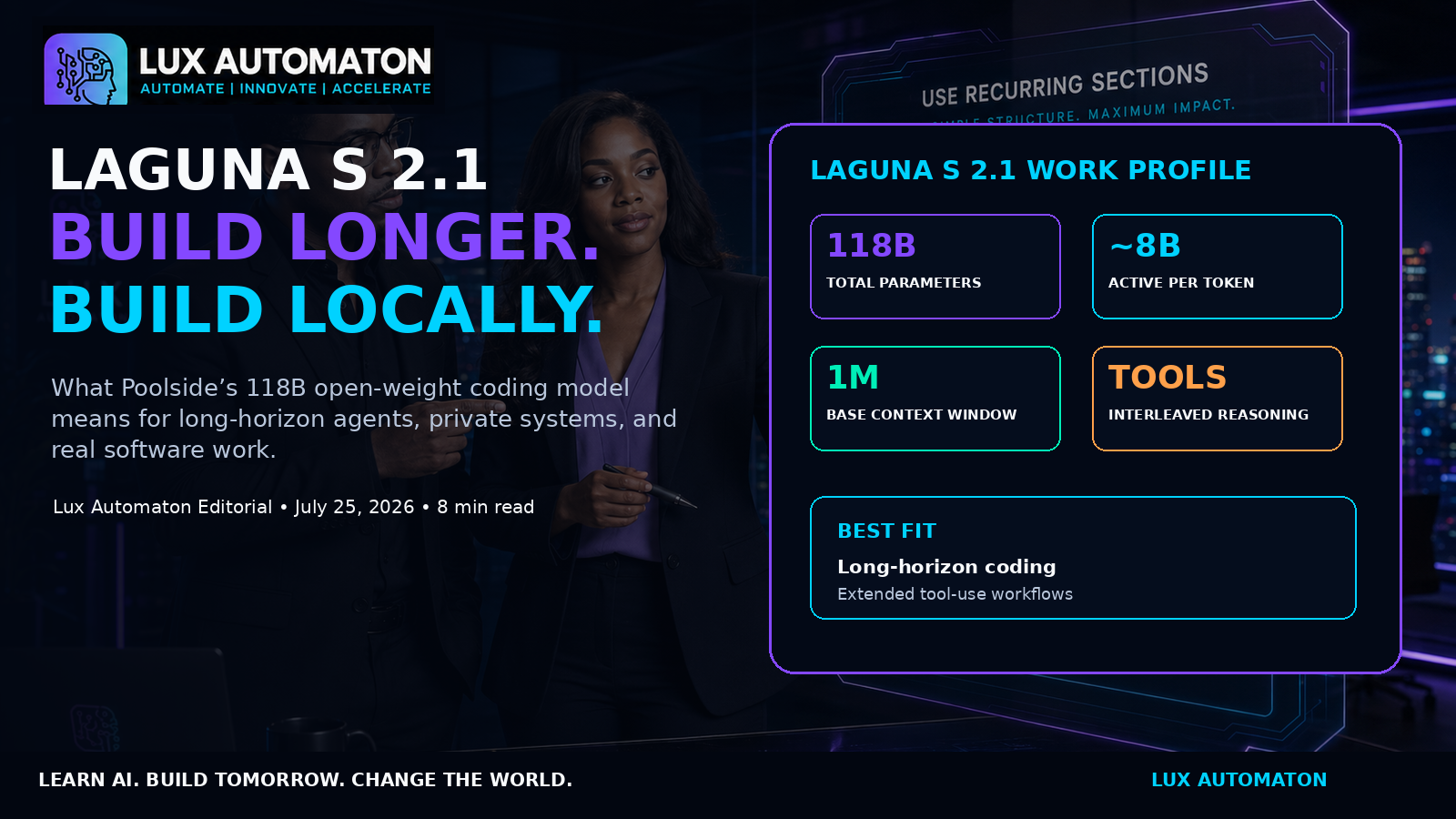
Poolside’s 118B open-weight model is designed to plan, use tools, recover, and keep working across large software tasks—if the hardware and agent harness are ready.
Continue reading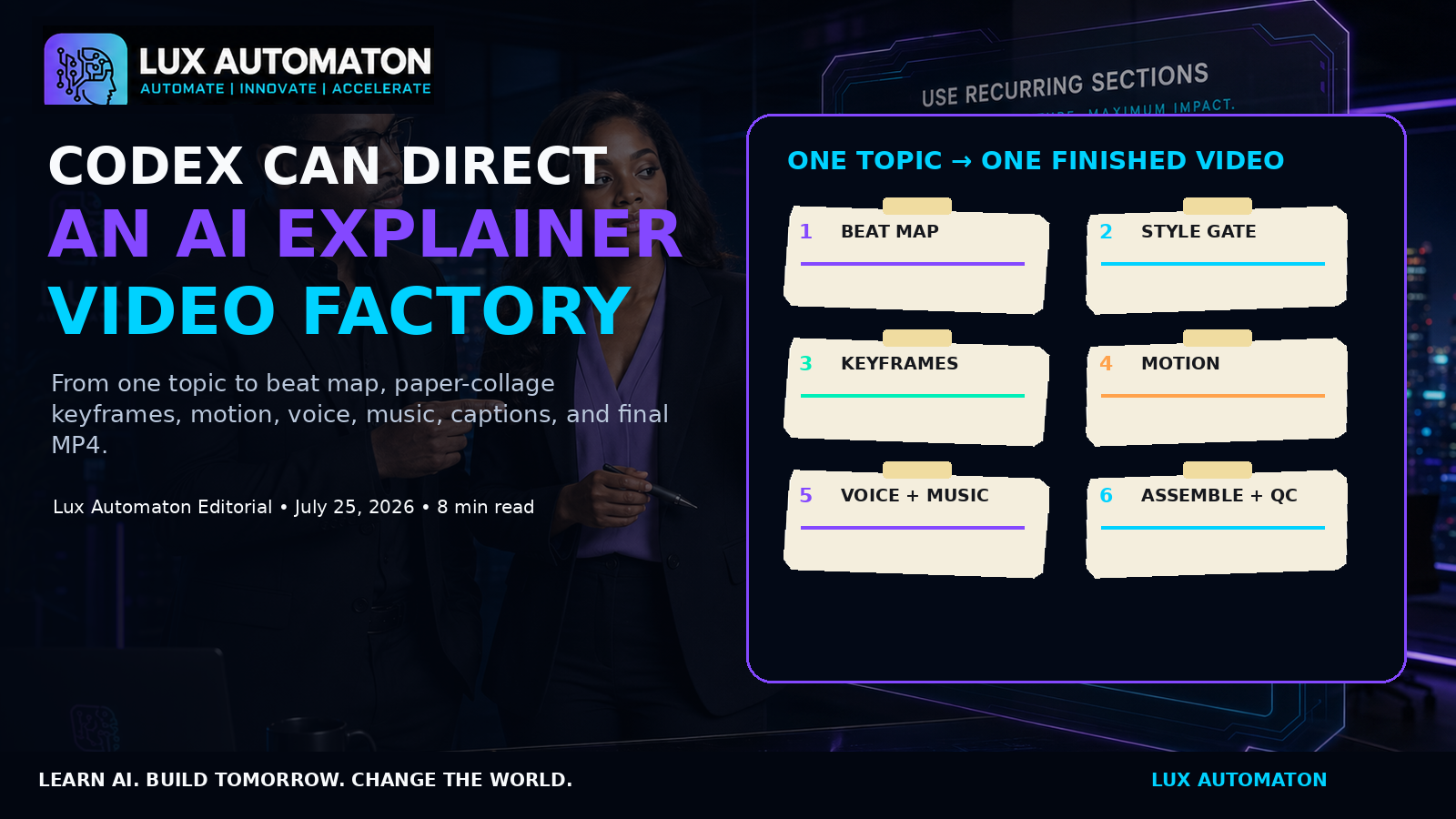
A practical guide to turning one topic into story beats, paper-collage keyframes, motion, narration, music, captions, and a finished video.
Continue readingHow the Lux Codex adds system perception to Story Memory—so the series can inspect scenes, recognize continuity risks, and ask for human judgment before the story changes.
Continue readingHow the Lux Codex connects characters, worldbuilding, lore, scenes, timelines, and continuity into one living system that remembers the entire series.
Continue readingHow the Lux Codex Reality Memory protects character identity, approved references, wardrobe, voice, and story state across AI-generated scenes.
Continue reading
Open-source tools with real momentum, practical value, and a clear Lux verdict.
Continue reading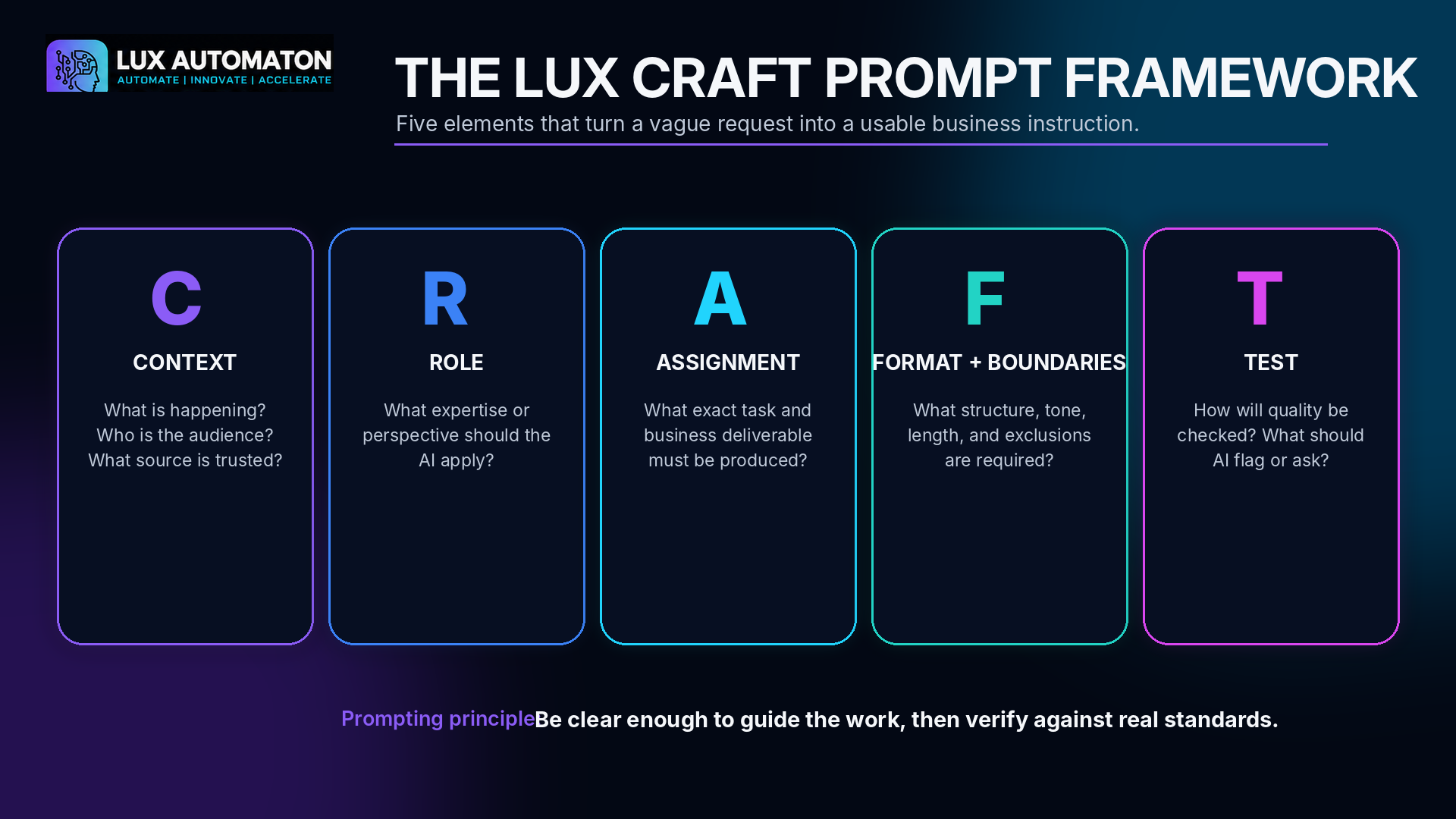
Why these viral one-word prompts can be useful—and why clear context still matters more than any so-called secret code.
Continue readingWhy AI storytelling needs a Story Bible, character locks, a timeline, and a continuity score before the next scene is rendered.
Continue reading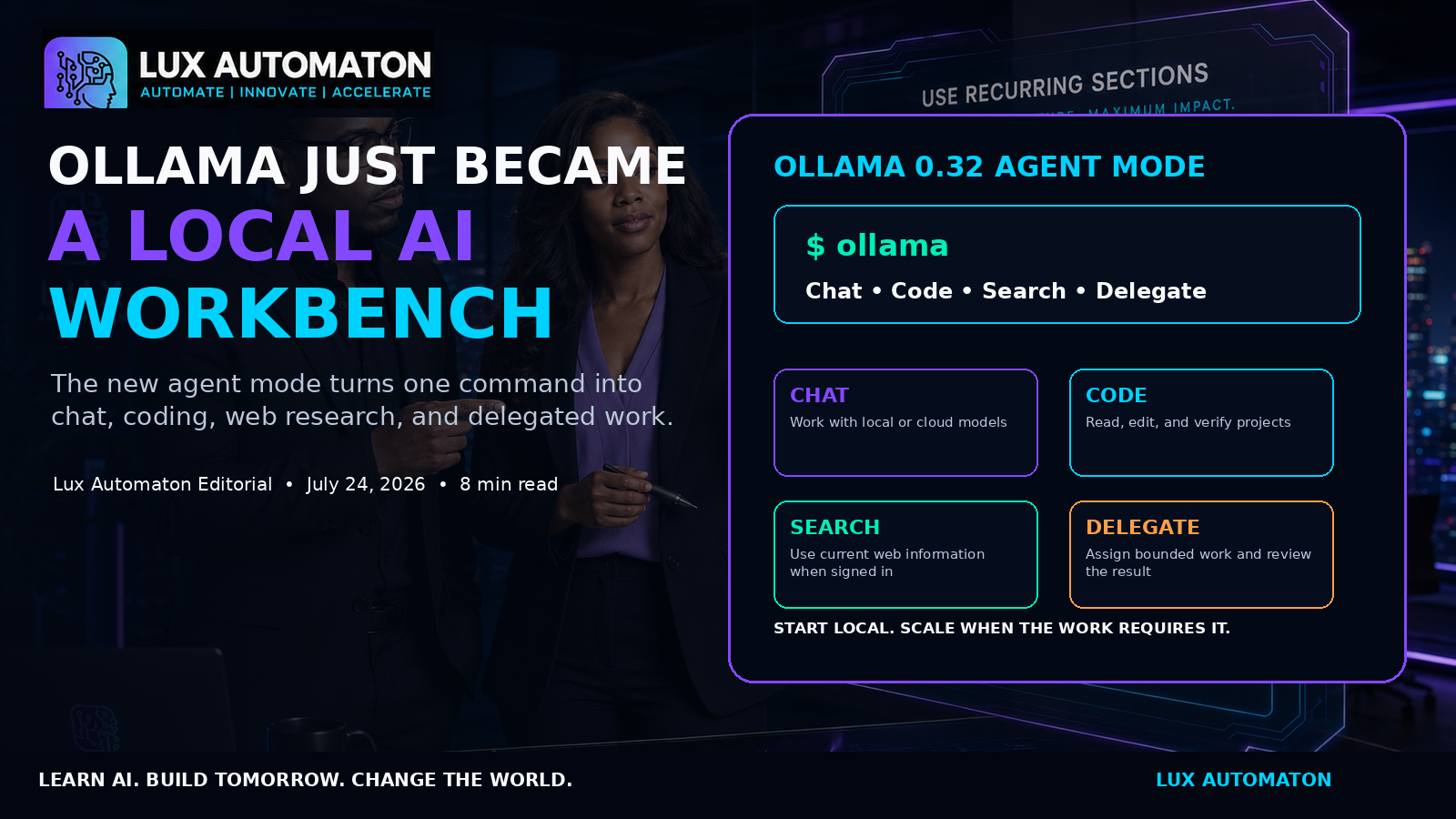
Ollama 0.32 turns one command into an interactive agent for chat, coding, web research, and delegated tasks—while preserving the choice to run locally.
Continue reading
What one open-source coding-agent skill teaches us about clearer communication, lower cognitive friction, and work people can actually start.
Continue readingOffline-ready AI that travels with you. Your memory. Your tools. Your workflow.
Continue reading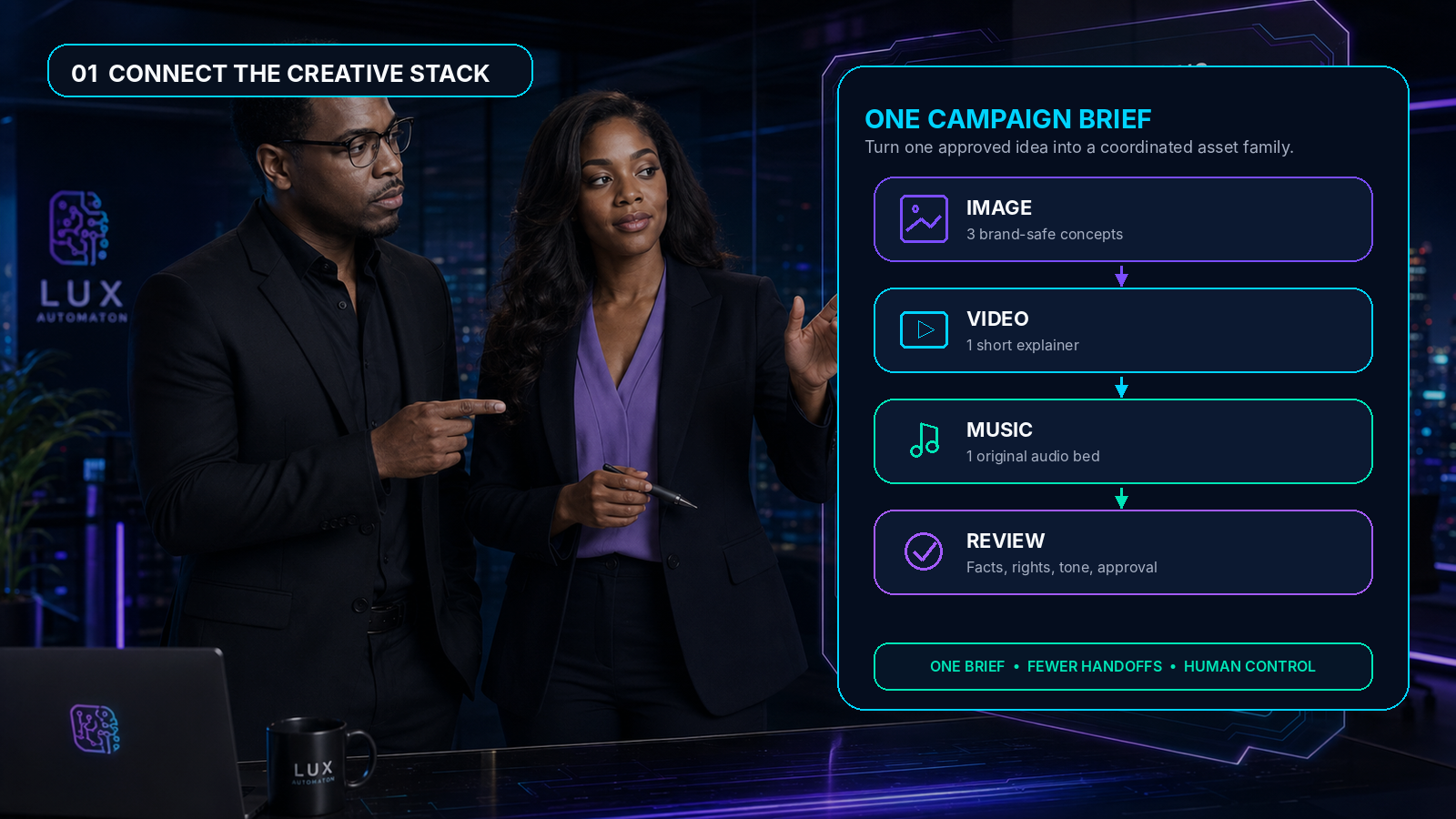
A practical guide to turning image, video, music, agents, education, and mobile AI into repeatable business systems.
Continue readingA kid-friendly healthcare lesson about smart tools, body data, and why human judgment always matters.
Continue readingLANA and Ace explore a smart pharmacy, meet a wellness robot, and enter a holographic data garden while learning that AI supports healthcare professionals—it does not replace them.
Continue readingOne clip is just a seed. A series needs a soul. Welcome to the birth of Lux Codex and cinematic AI continuity.
Continue reading
A practical guide to replacing scattered apps with one intelligent operating layer.
Continue reading
How one newsletter can connect product updates, founder notes, workshops, and customer wins.
Continue reading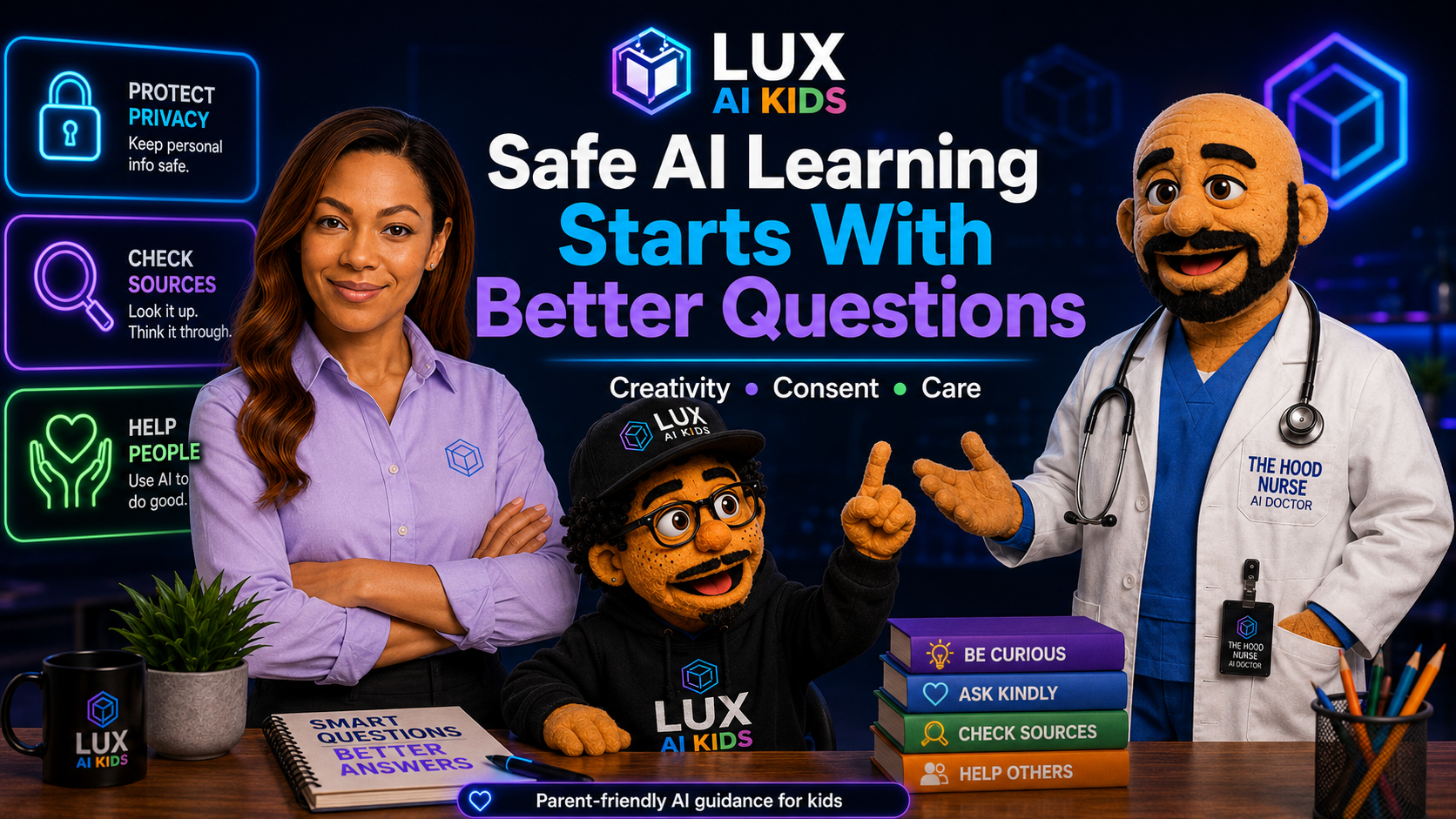
A parent-friendly framework for helping kids use AI with creativity, consent, and care.
Continue readingBefore buying another tool, map the work that repeats every week.
Continue reading
Cloud tools are useful, but ownership and continuity matter when the work is sensitive.
Continue reading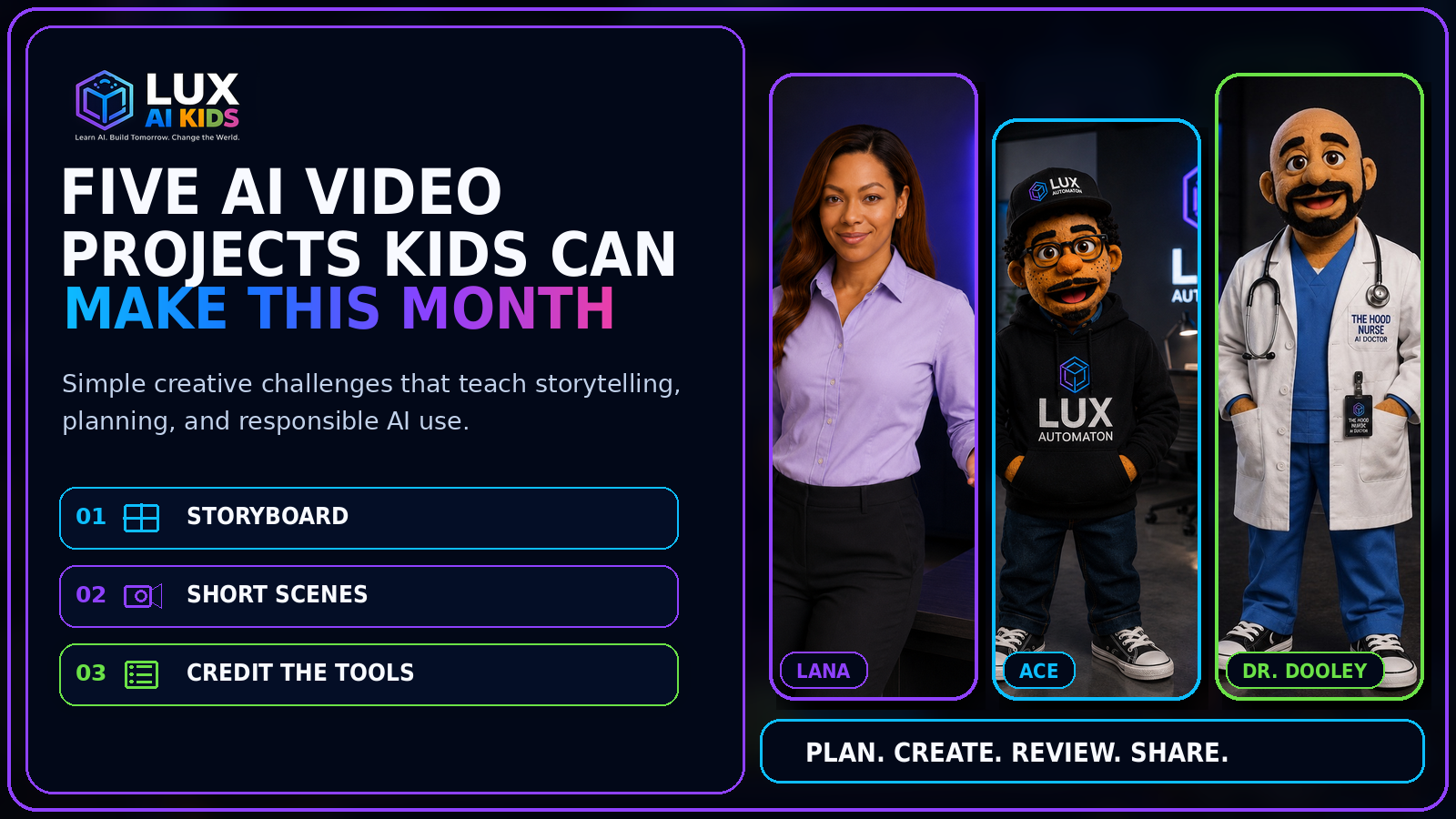
Simple creative challenges that teach storytelling, planning, and responsible AI use.
Continue reading
How to package expertise so customers know exactly what they are buying.
Continue reading
A lightweight method for using Lux Coder to turn rough ideas into working software surfaces.
Continue reading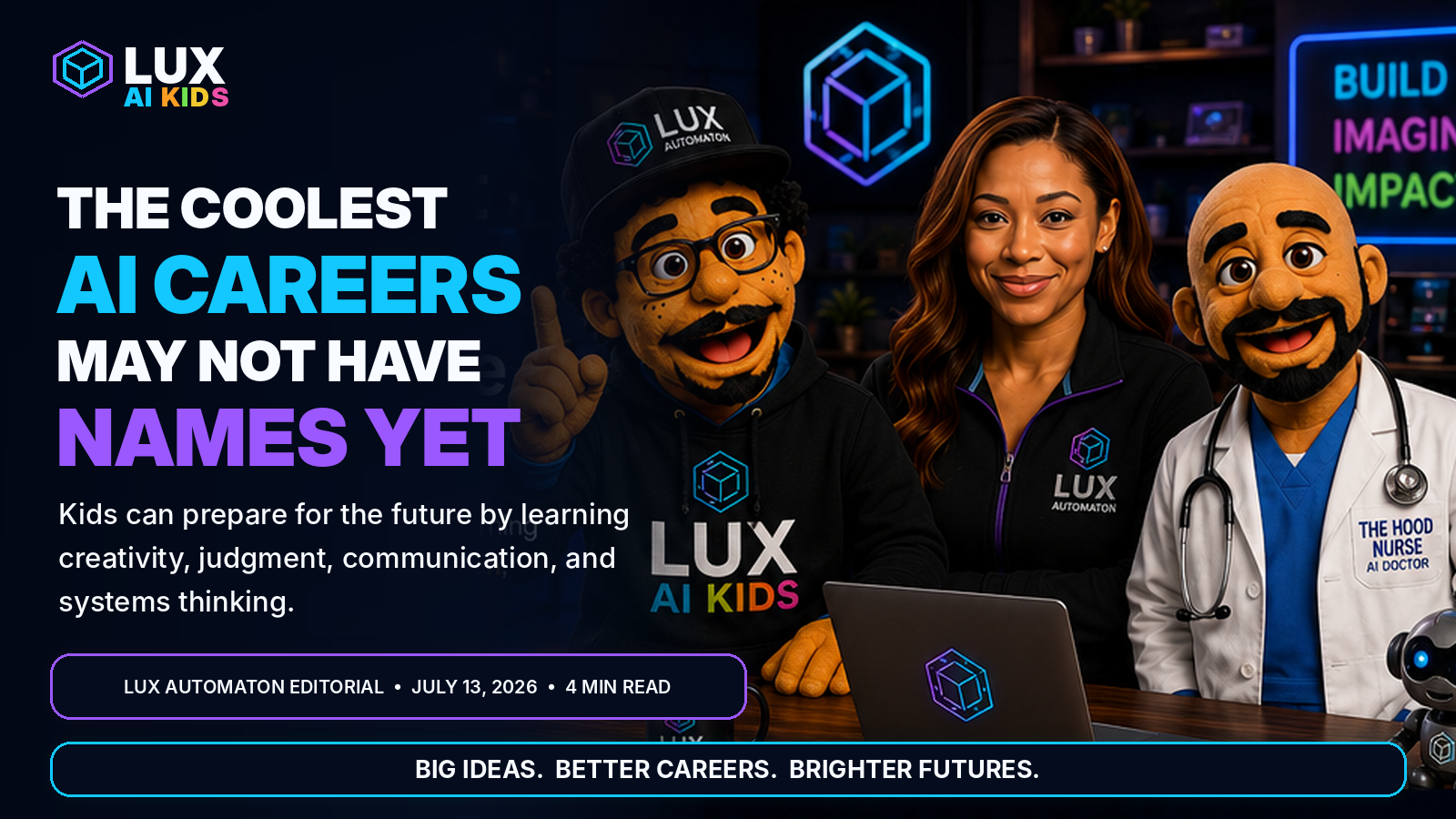
Kids can prepare for the future by learning creativity, judgment, communication, and systems thinking.
Continue reading
Blogs, workshops, newsletters, and video channels turn a website into a living ecosystem.
Continue reading
# How Local AI Models Help Small Businesses Create Content Without Another Monthly Subscription
Continue reading# How Local AI Models Help Small Businesses Create Content Without Another Monthly Subscription
Continue readingLux Automaton / Cinematic AI & Narrative Engineering
Complete interactive PDF/HTML worksheet included with this story.
Episode 8 brings the central promise of Asa + LANA: The Story Remembers into focus.
The Lux Codex can now preserve characters, locations, scenes, timelines, perception records, world state, and approved changes. But memory alone is not the final goal. A story system must also understand relationships between moments—recognizing that one decision changes what becomes possible next.
Episode 8 introduces the Narrative Core—the layer where memory, judgment, continuity, boundaries, and outcomes meet.
“**The story remembers because every accepted choice becomes part of what the future must respect.**”
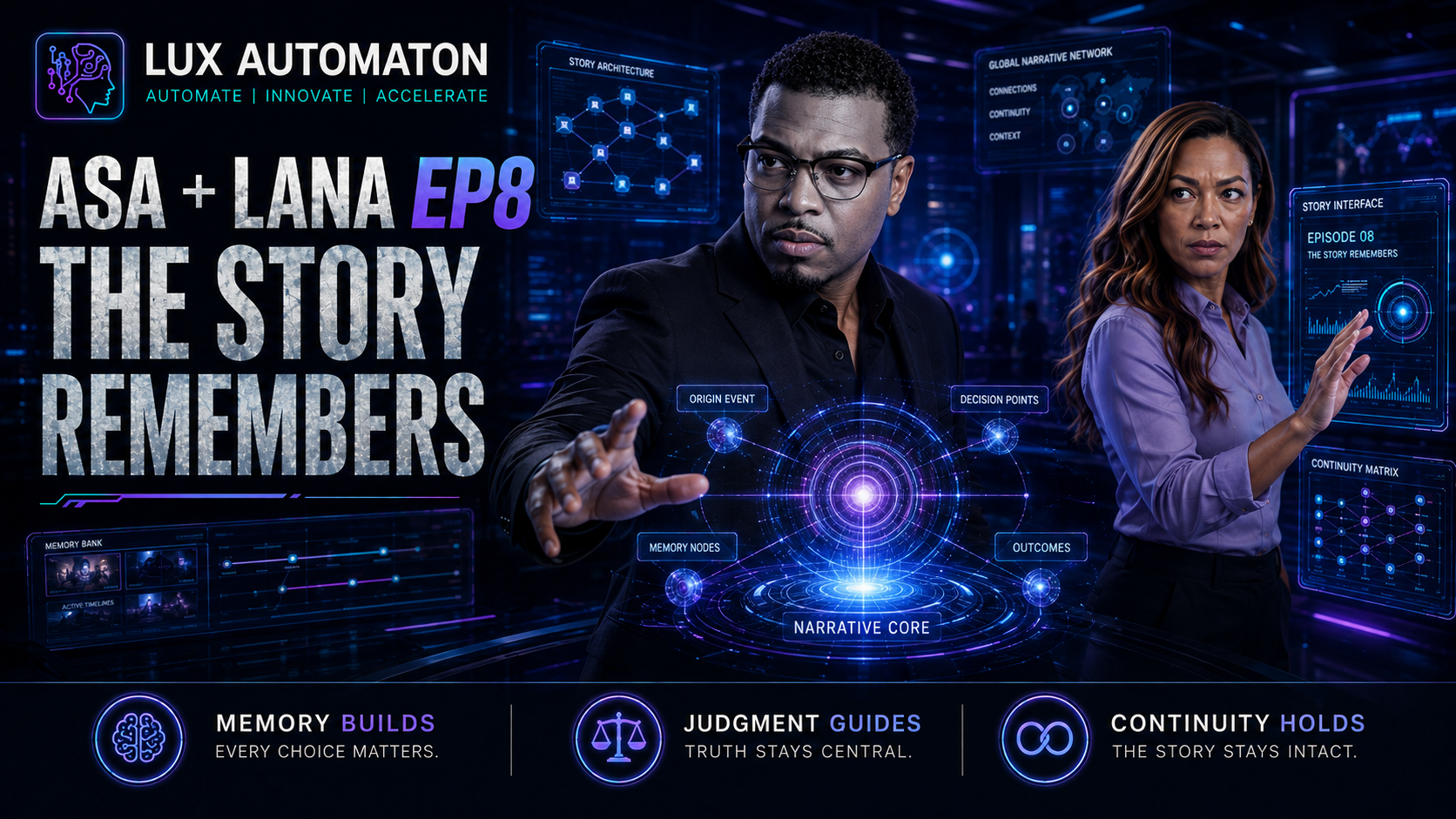
A folder of scenes is an archive. A narrative memory is a connected model of what happened, why it mattered, and what changed because of it.
Earlier episodes established Story Memory, Character Identity Locks, Reality Memory, Story Bible Core, Story Perception, Global Story Map, and the Canon Decision Ledger. Episode 8 connects those systems through the Narrative Core.

An origin event creates a new branch in the story. A decision point is the moment when the story could move in more than one direction. The system preserves options considered, risks, recommended paths, rejected paths, human decisions, reasons, and actual outcomes.
Episode 8 introduces one of the most important ideas in the series: a system needs limits around what it is allowed to remember, change, and influence.

The story boundary defines what belongs inside the project. The memory boundary defines what can become durable (allowing approved scene outcomes while forbidding credentials or private client data). The action boundary ensures LANA flags risks and isolates fragments without independently publishing or overriding human decisions.
Episode 8 ends where the Lux system must always return: human judgment. The Narrative Core can show memory, risks, outcomes, and recommended paths, but it cannot replace creator responsibility.

A strong approval evaluates Intent, Ethics, Impact, Continuity, Authority, and Reversibility. The system compares expected and actual outcomes so the story learns from every choice.
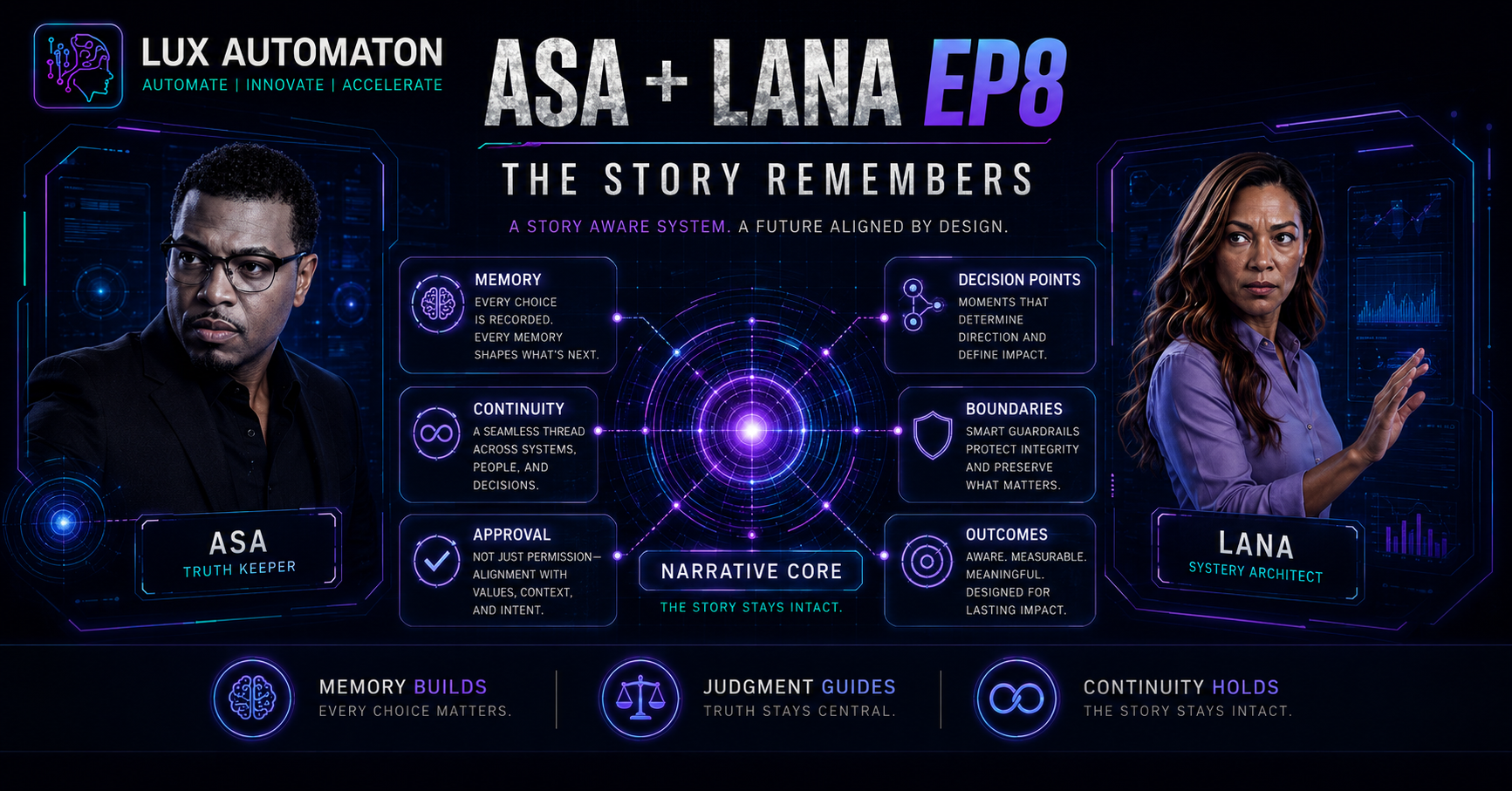
“**“The story remembers the choice. The creator remains responsible for what comes next.” — Asa Pritchard** **Learn AI. Build Tomorrow. Change the World. — LANA**”
Download the Narrative Core Decision Workbook (/documents/narrative-core-decision-workbook.html), Lux Codex JSON Template (/documents/lux-codex-narrative-core-template.json), HTML Edition (/documents/asa-lana-ep8-the-story-remembers.html), and Markdown Source (/documents/asa-lana-ep8-the-story-remembers.md).