
Keep learning with the companion guide.
Open this simple resource in a new tab, then use it at your own pace.
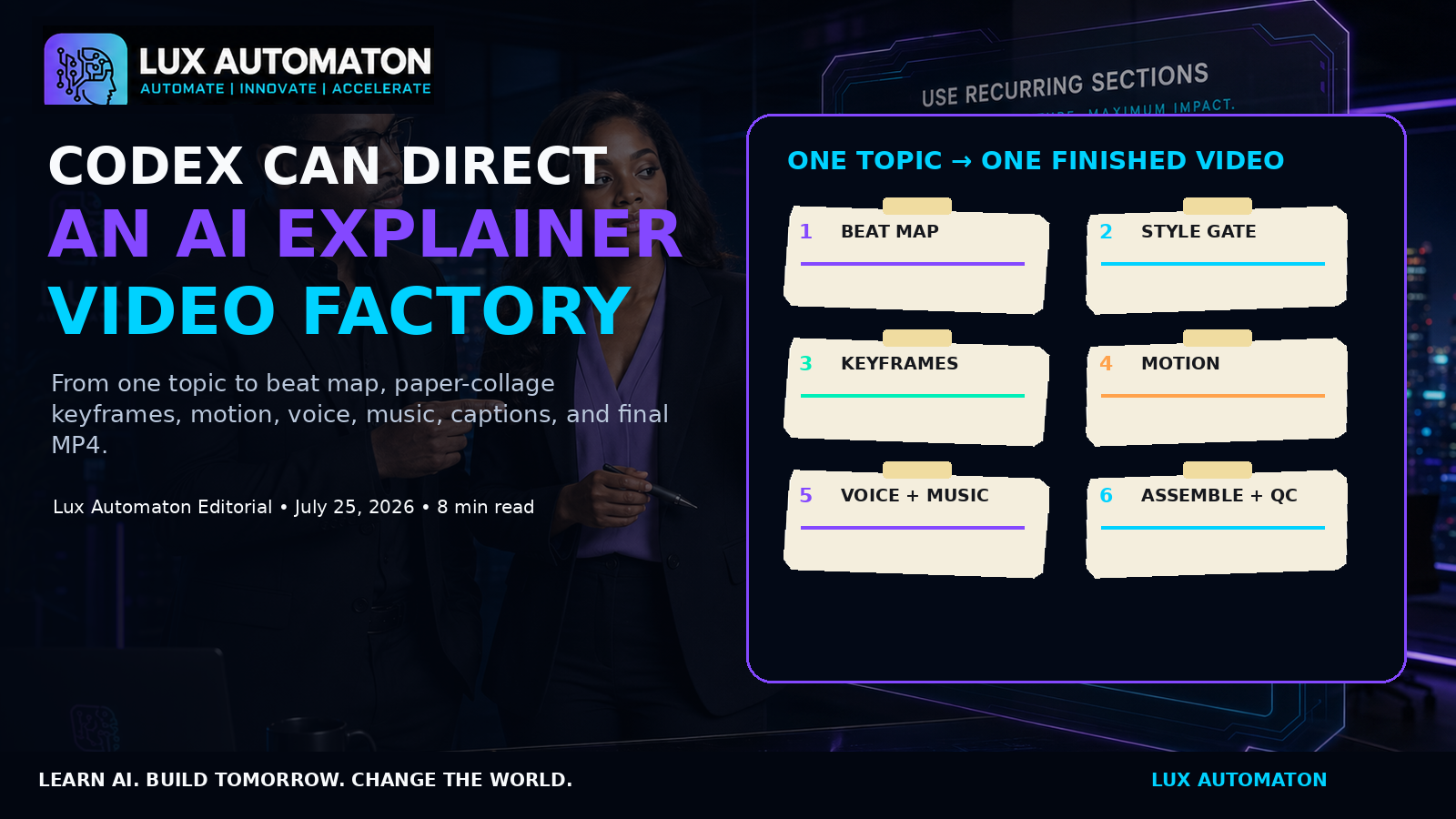
Open the free guide →The source video begins with an idea that would have sounded unrealistic not long ago: Give Codex one topic and let an AI-agent workflow help turn it into a polished editorial explainer video.
Not only a script. Not only a generated clip. A complete production path: Narrative beats, paper-collage keyframes, motion, voice-over, background music, captions, watermark, and final MP4.
The open-source workflow behind the video is called Vox Director. Its repository describes an agent skill that can be used by Codex, Claude Code, or another coding agent. Atlas Cloud handles the media-generation APIs, while local ffmpeg assembles the final film.
**The agent can coordinate the production stages, while the human remains responsible for the story, style, rights, and final publish decision.**
A note about 'Vox-style'
The source video uses the phrase Vox-style to describe an editorial paper-collage language: torn paper, cut-out images, tape, halftone dots, archival clippings, bold flat colors, and oversized headlines.
A company should build its own identity. Do not copy another publisher’s logos or signature graphics. Lux Automaton uses the general editorial-collage technique through its own dark navy, cyan, purple, teal, typography, characters, and educational tone.
01 — One source of truth keeps the film aligned
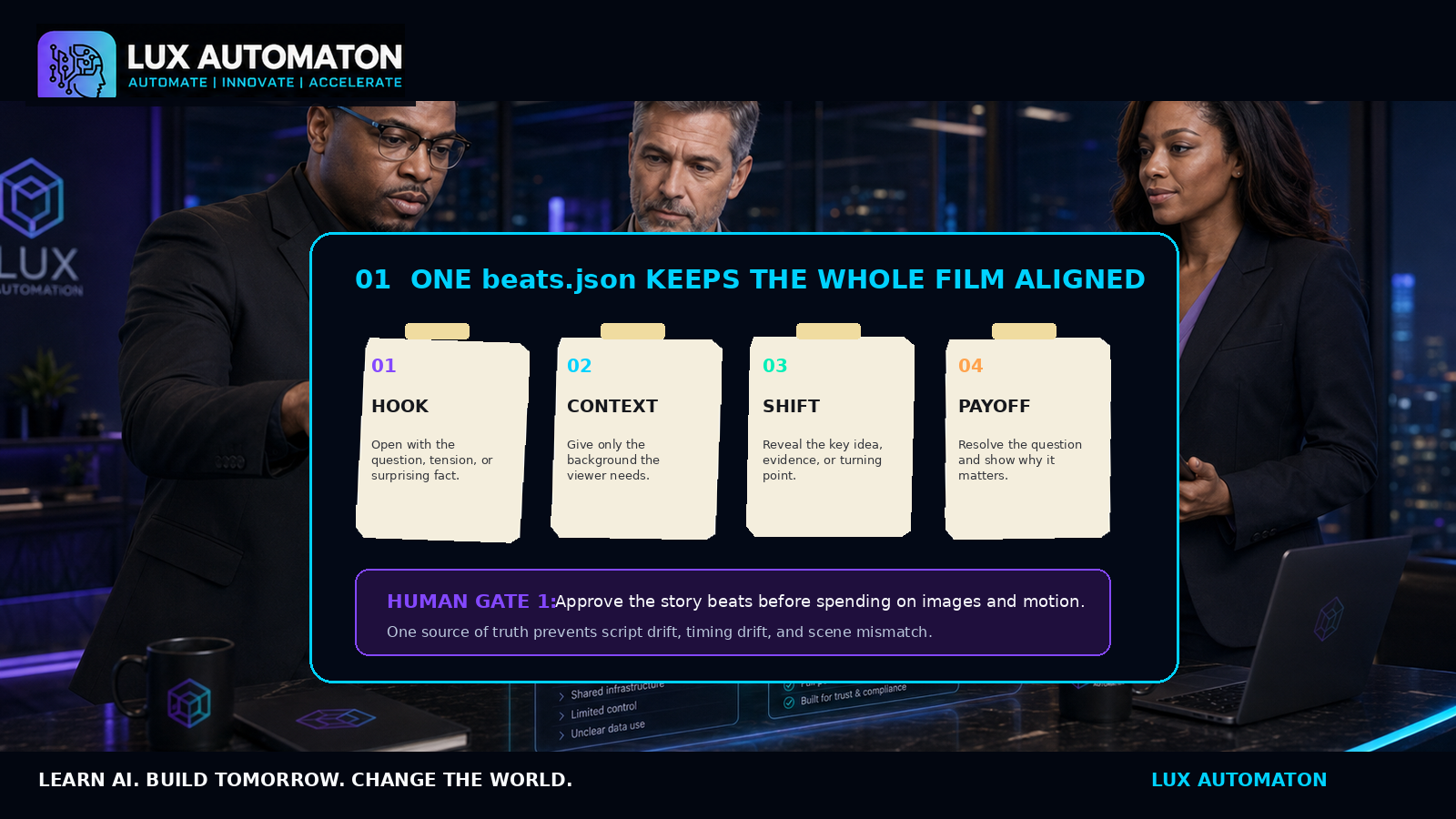
The repository organizes each project around one file: beats.json. That is the continuity engine for the video.
One shared beat map gives every production stage the same structure. Script, visual, motion, timing, and captions belong to the same beat object.
Human Gate 1: approve the beat map
The repository intentionally pauses after the beat map. Generating images, video, narration, and music costs time and money. A weak story does not become strong because more models touch it.
**Asa’s note:** 'Do not automate uncertainty downstream. Make the story decision before the expensive steps begin.'
02 — Humans should approve the story and the look
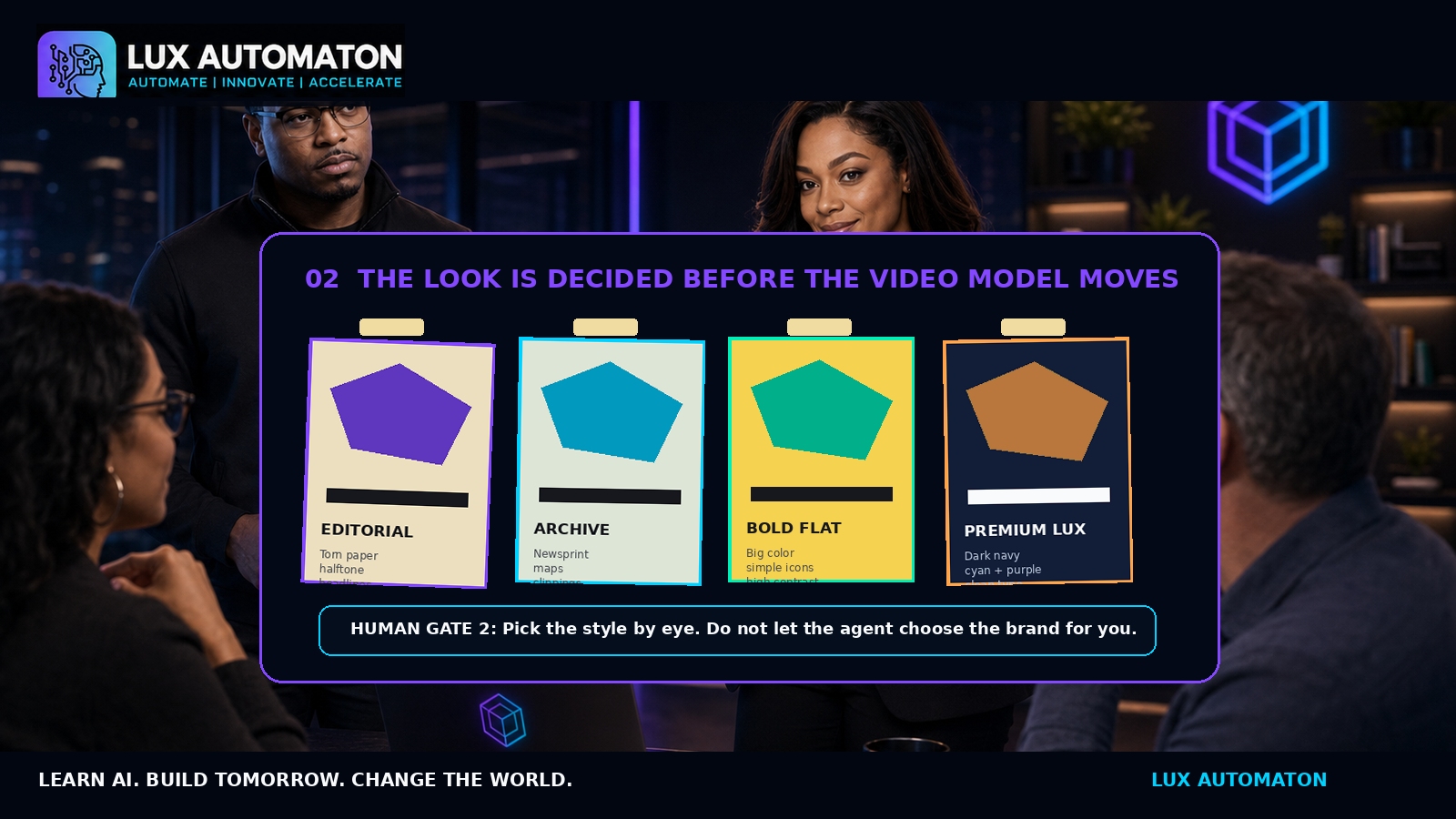
The second major decision gate is the style bake-off. The workflow renders the same beat in three or four visual themes. The creator compares them and chooses the direction by eye.
The keyframe should already contain the collage DNA: cut-out subjects, paper texture, torn edges, tape, headline typography, and a readable focal point. Motion brings that poster to life; it does not invent the art direction.
03 — The agent can automate production, but not responsibility
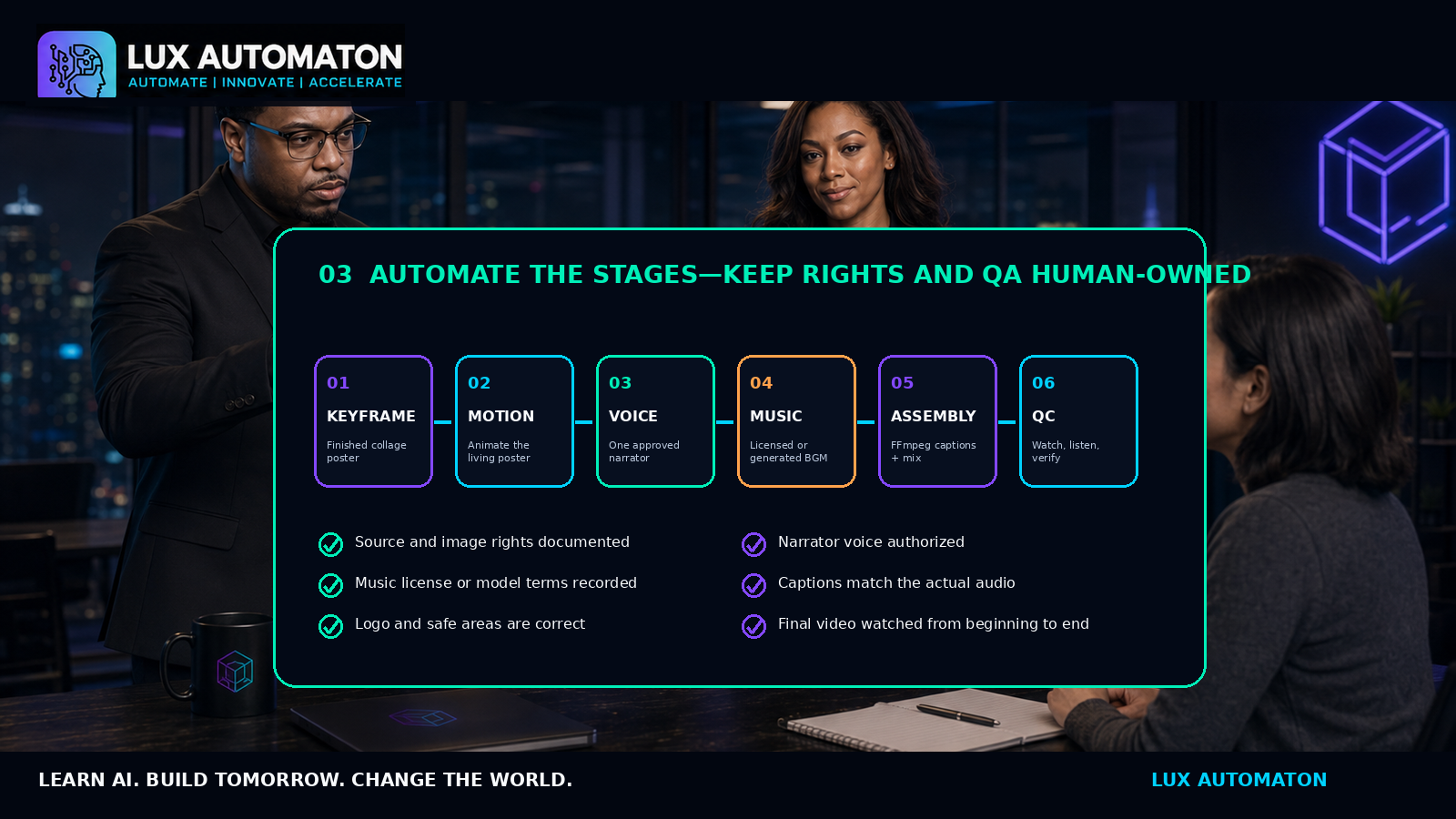
After the two approval gates, the workflow runs the production chain: Keyframes -> Image-to-video animation -> Voice-over -> Music ducking -> Local FFmpeg assembly -> Captions & watermark.
Explainer Video Workflow Overview
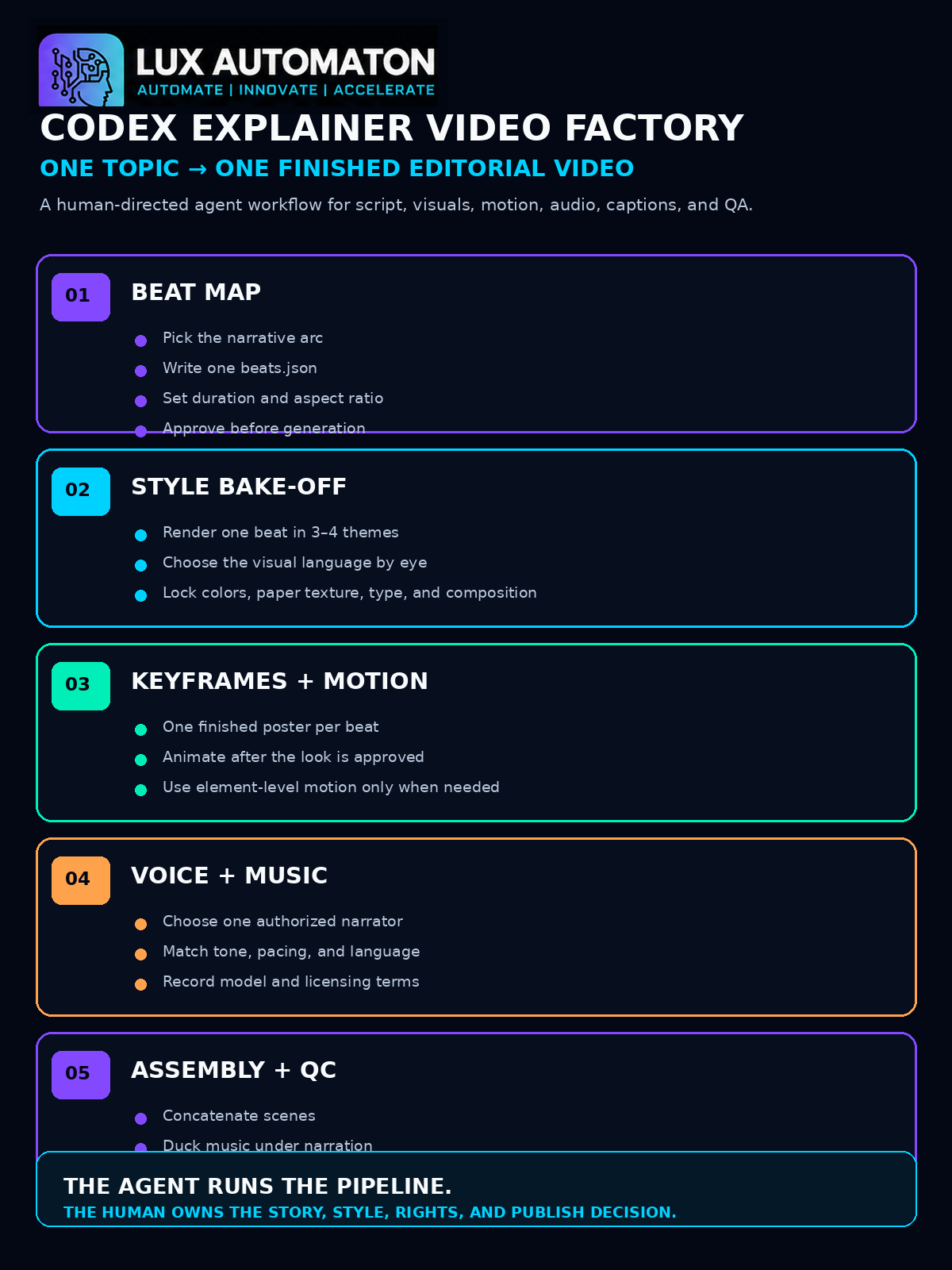
This structure turns Codex from a one-time video assistant into a production operator that gets better through documented workflows.
**“AI should work for you.” — Asa Pritchard** **Learn AI. Build Tomorrow. Change the World. — LANA**
Your next action
Open the AI Explainer Video Production Planner (/documents/ai-explainer-video-production-planner.html), download the Lux Codex Explainer Video Workflow JSON (/documents/lux-codex-explainer-video-workflow.json), and inspect the Sample Beats JSON (/documents/sample-beats.json). Choose one 15-30 second topic and build only the beat map today. Approve the story before generating the film.