Keep learning with the companion guide.
Open this simple resource in a new tab, then use it at your own pace.
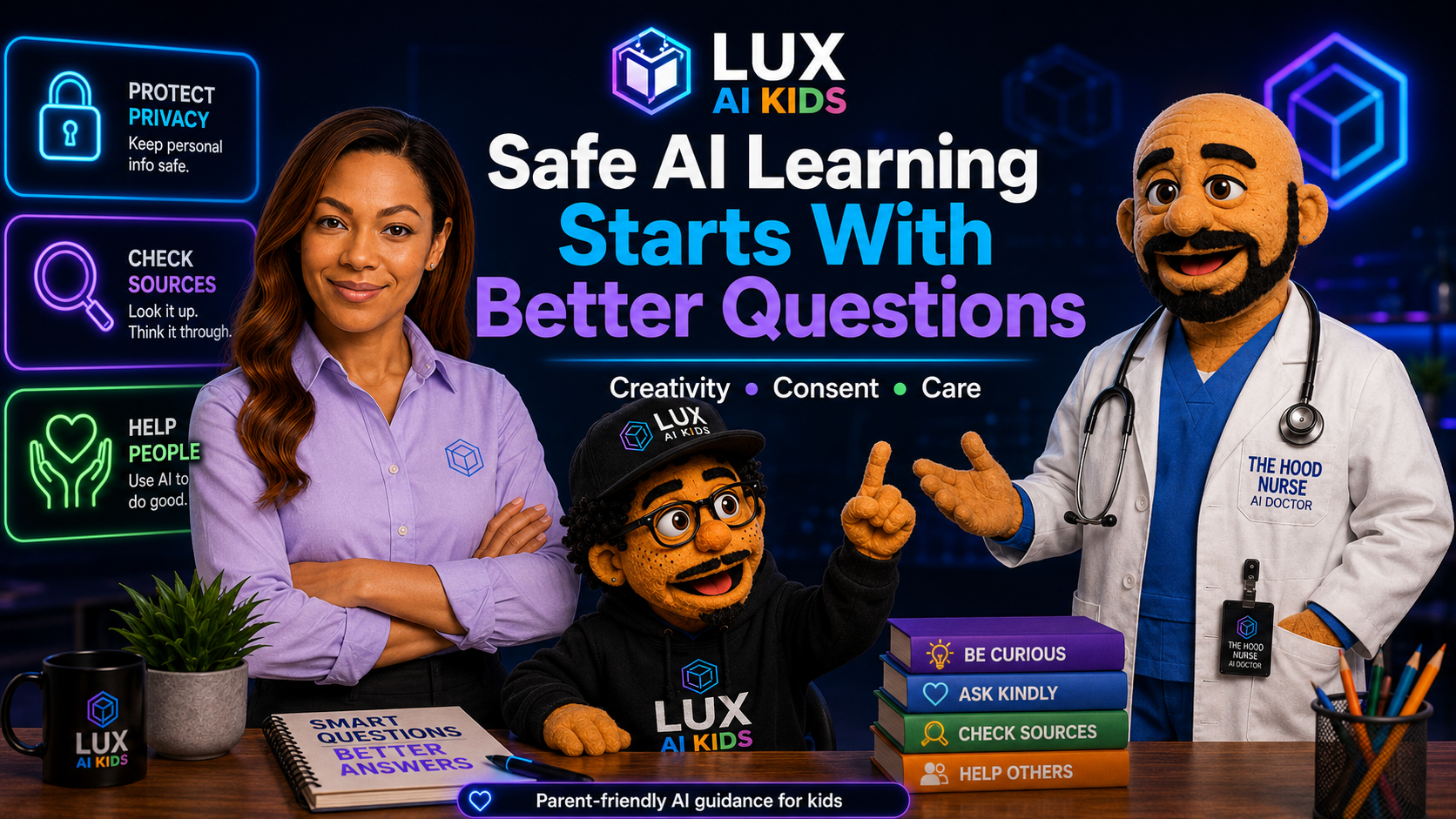
Open the free guide →Kids do not need fear-based AI education. They need grounded, honest guidance. The safest starting point is a better question: What are we trying to make, who could it affect, and what should stay private?
AI is becoming part of school projects, search, games, art tools, and everyday problem-solving. That makes family conversations more useful than a long list of warnings. Children need a simple routine they can use before they type a prompt, upload a file, or share an AI-assisted creation.
LUX AI Kids teaches AI as a creative partner—not a magic answer machine. Students learn how prompts work, how images and text can be improved, and why human judgment still matters. Better questions give children a practical next step: pause, think, ask, check, and create with care.
01. Ask before sharing personal information
Before a child types a prompt or uploads an image, ask: Does this tool really need this information to help with the project?
Most creative activities do not require a child’s full name, home address, school name, phone number, password, exact location, private messages, medical details, or personal photos. Instead of entering identifying information, children can describe the idea in a general way.
Try this: Replace “Make an invitation for Maya Johnson at 14 Cedar Street” with “Make a space-themed birthday invitation for a ten-year-old.” The creative goal remains, while private details stay private.
Consent matters, too. A friend’s photo, voice, artwork, story, or personal experience is not automatically ours to upload. Children should ask permission before using material that belongs to someone else—even when the project is meant to be fun.
“Let’s describe the idea without identifying anyone.” — LANA

02. Check sources together
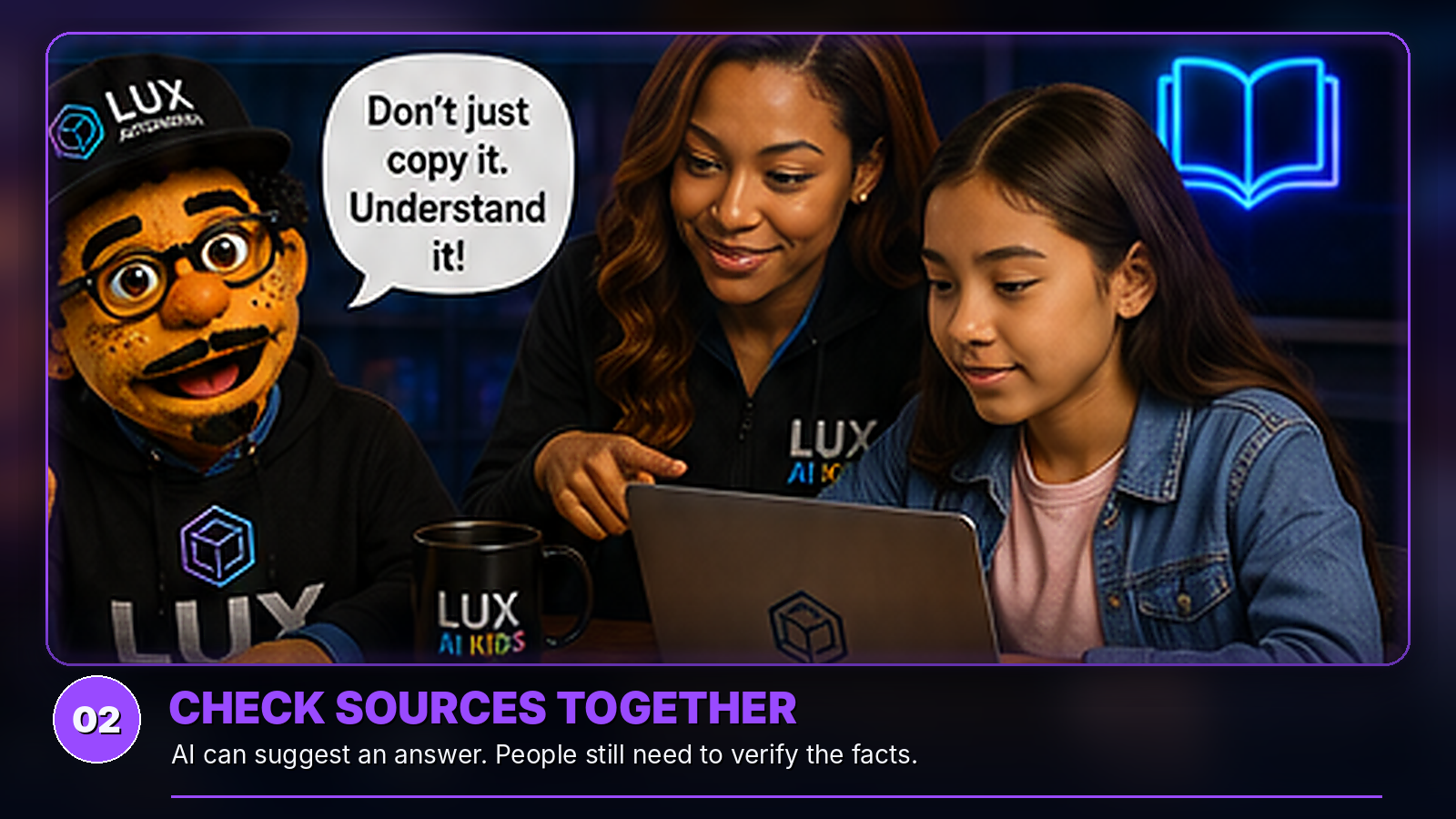
AI can produce a useful answer and still make a mistake. It may miss context, misunderstand the question, combine unrelated details, or present uncertain information as if it were settled. Children should learn one important rule: confident is not the same as correct.
Make verification collaborative rather than stressful. Identify the claim, ask where it came from, open the original source when possible, and compare it with another reliable source. Even a citation supplied by an AI tool should be opened and checked.
- Who created this information?
- How recent is it?
- Can we find the original source?
- Does another trustworthy source agree?
For medical, legal, safety, or emergency questions, an AI answer should never become the final decision.
“Let me keep it real: AI can help organize information, but trained professionals bring judgment, experience, and human care. AI is your assistant, not your replacement.” — Dr. Torrey Dooley, The Hood Nurse
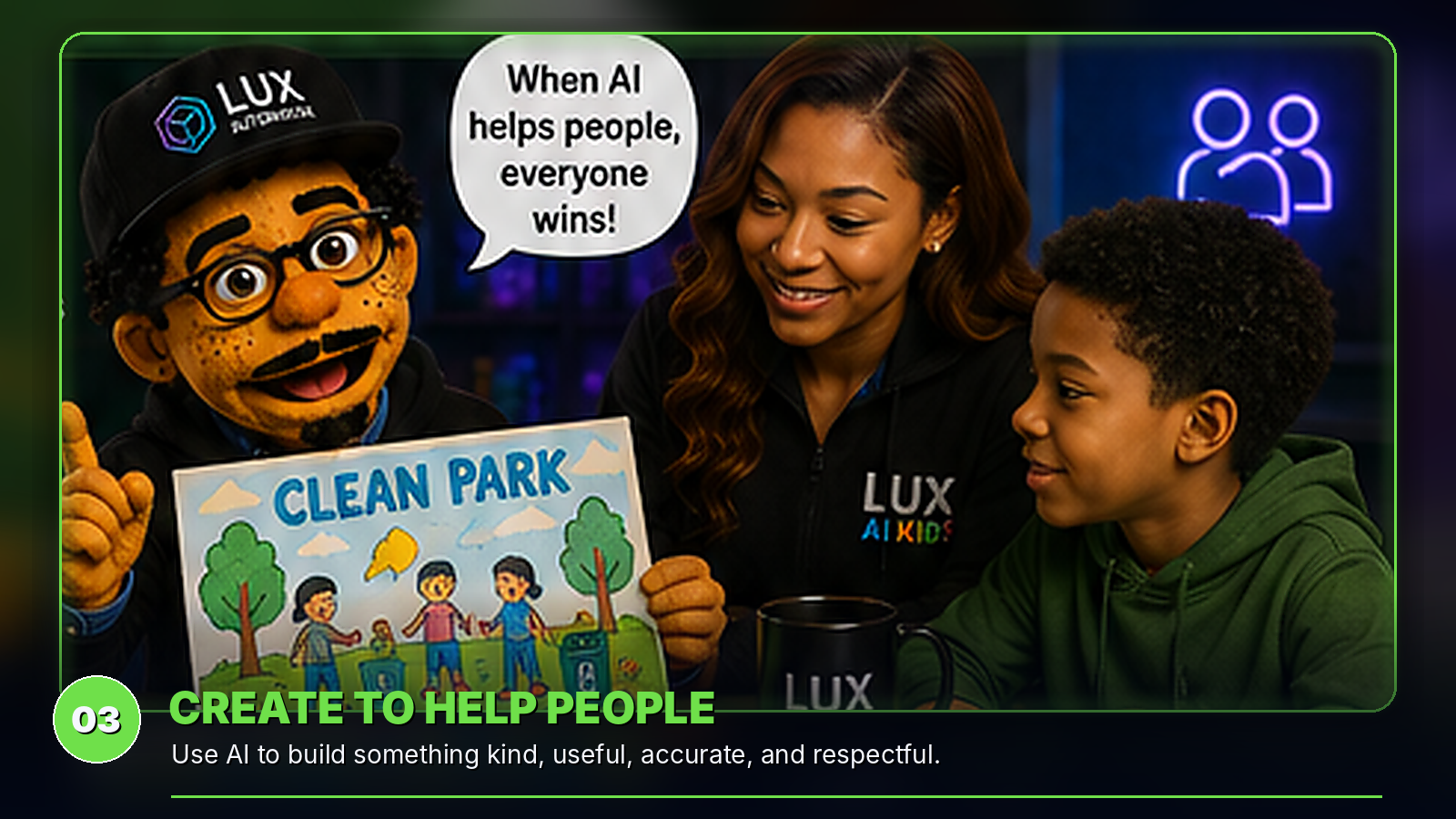
03. Make projects that help people
The best projects begin with care. A student can design a reading guide for a younger child, a kindness poster for school, an accessible event flyer, a healthy-habits reminder, a neighborhood cleanup campaign, or a story that helps someone understand a difficult idea.
These projects show that AI is more than a shortcut. It can support imagination, communication, and service—but the child still decides what matters, what is fair, and what should change.
Before publishing or sharing, ask:
- Who is this for?
- Is it accurate, kind, and respectful?
- Could it embarrass, exclude, or misrepresent someone?
- Do we have permission to use every photo, voice, story, and piece of art?
Encourage children to revise the AI’s first answer. They can rewrite the language, remove stereotypes, add missing viewpoints, improve the design, and make the final work reflect their own thinking.
“Big ideas start with curiosity—and they get better when we ask, check, and create together!” — Ace
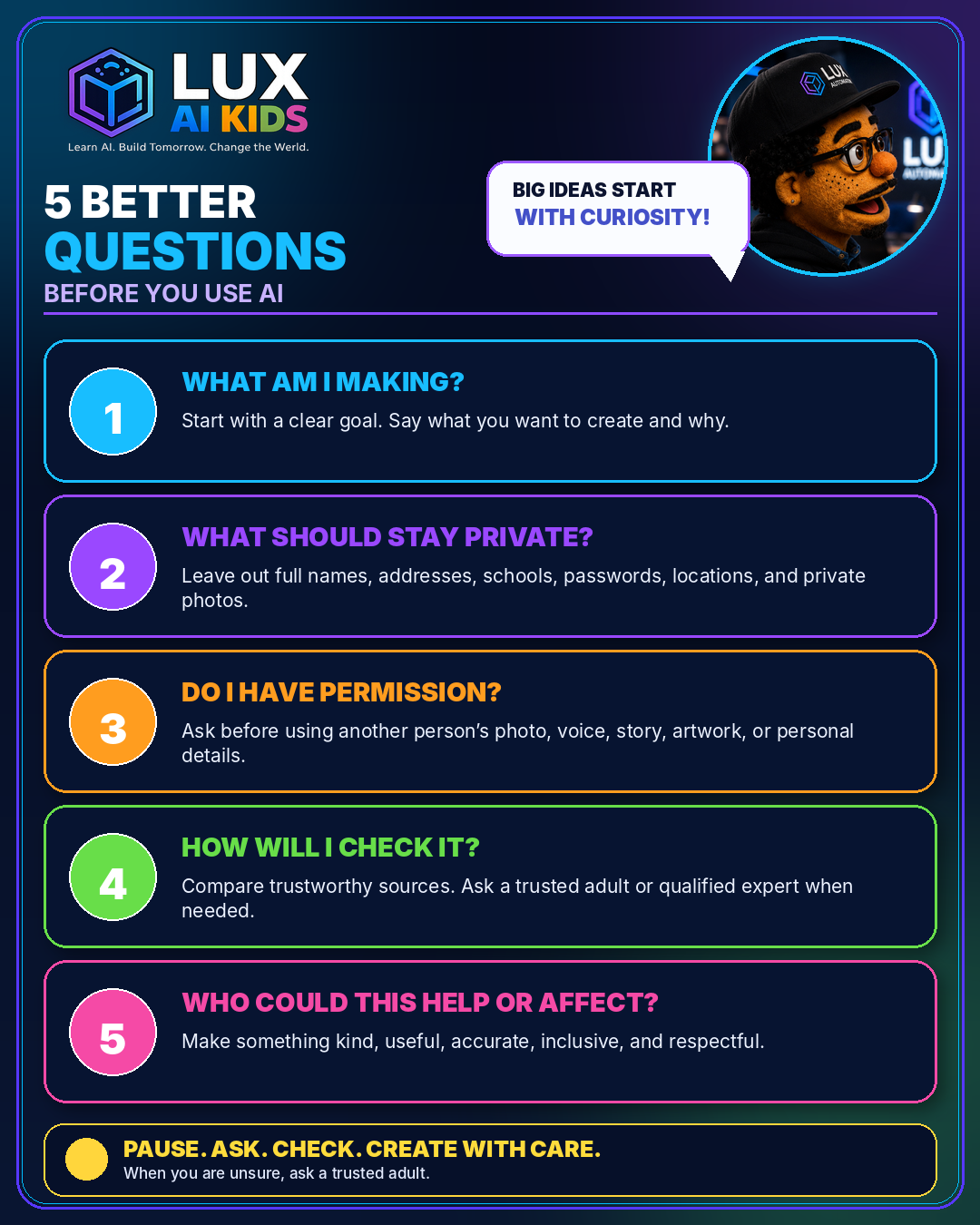
Five better questions before using AI
1. What am I making? Begin with a clear goal.
2. What should stay private? Share only what the project needs.
3. Do I have permission? Respect other people’s identities and creative work.
4. How will I check it? Compare sources and ask for qualified help when needed.
5. Who could this help—or affect? Create something useful, kind, accurate, and inclusive.