Keep learning with the companion guide.
Open this simple resource in a new tab, then use it at your own pace.
Open the free guide →By Lux Automaton Editorial • July 24, 2026 • 5 min read
📥 FREE EPISODE 2 DOWNLOAD & ACTIVITY PACKAGE
Download the complete Episode 2 package, including the printable Smart Health Lab Challenge activity sheet, lesson guide, publishing kit, and original episode video.
In this story
01. Smart tools help healthcare teams work 02. Body data can reveal useful patterns 03. People make the final healthcare decisions
Dr. Dooley’s Smart Health Lab
The doors slide open, the lights glow blue and purple, and Ace freezes in the middle of Dr. Dooley’s healthcare innovation lab.
“Whoa,” Ace says. “This place looks like the future got a science fair!”
LANA smiles. Around them are digital displays, robotic tools, three-dimensional body models, and machines designed to help healthcare professionals study information.
Dr. Torrey Dooley—The Hood Nurse—steps forward in his white coat and blue scrubs.
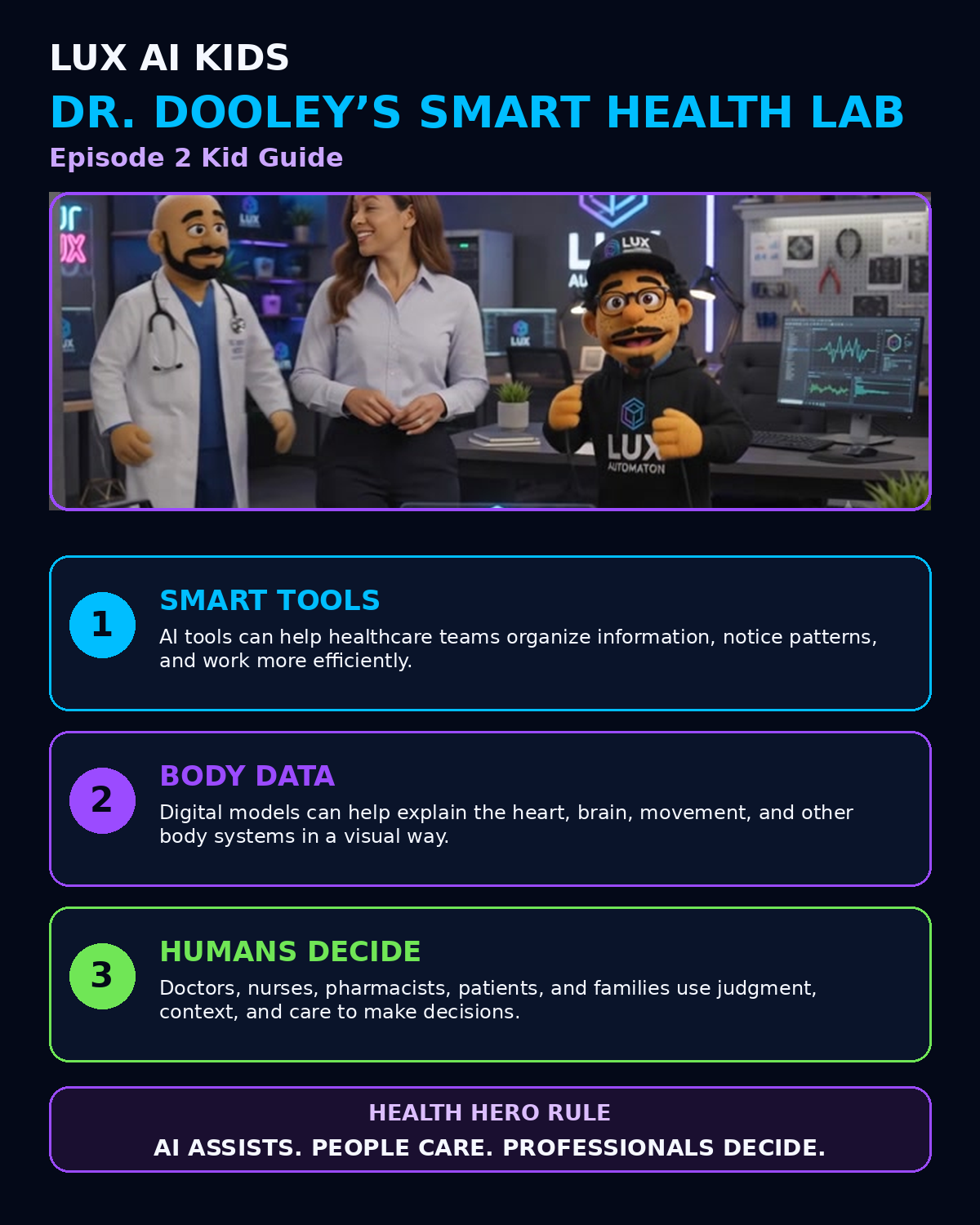
“Alright fam,” he says. “Today we’re keeping it real. These tools are smart, but they do not replace the people who care for us. AI is your assistant, not your replacement.”
That idea becomes the lesson for their second healthcare adventure.
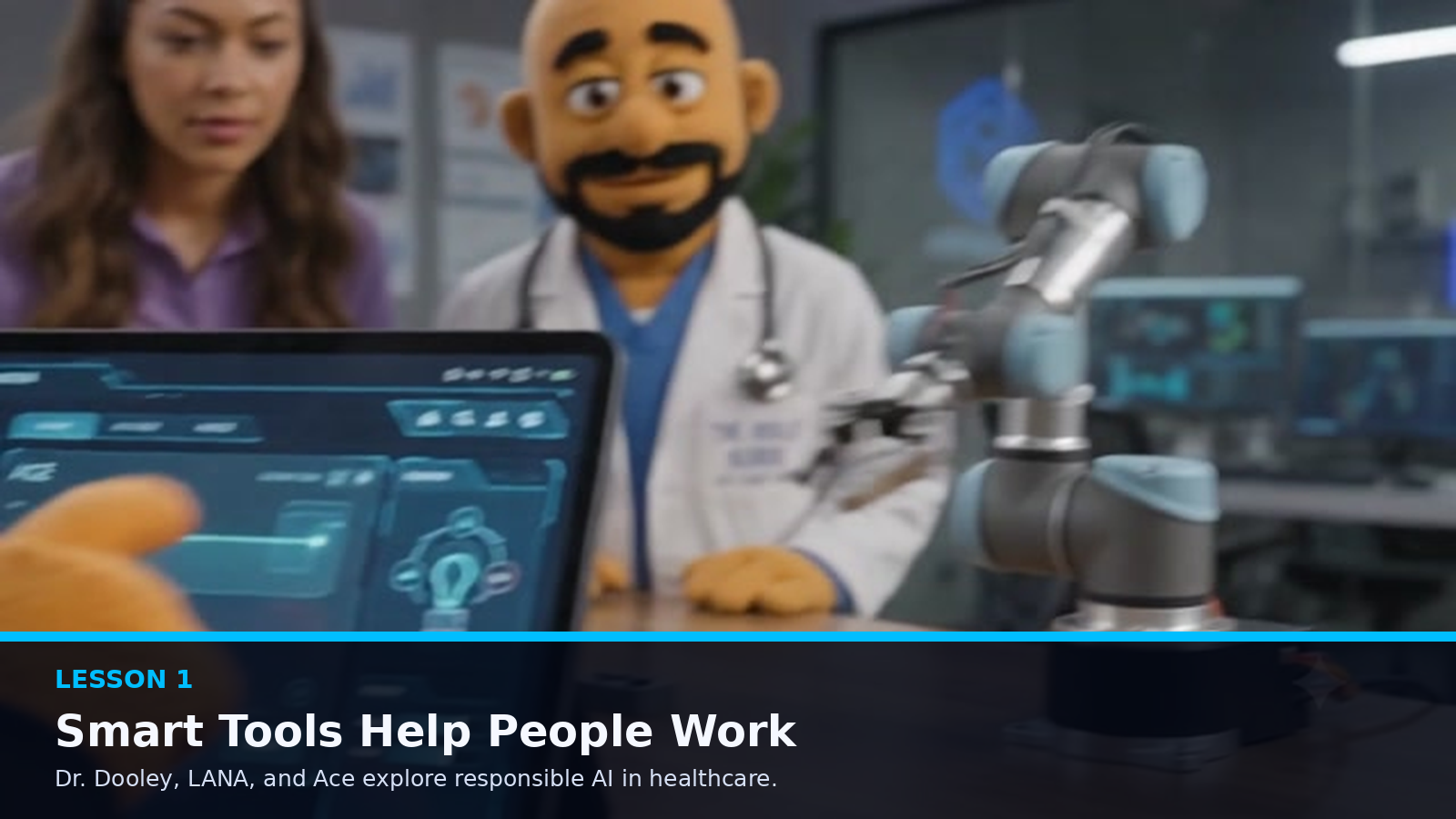
Lesson 1: Smart tools help healthcare teams work
At the first station, Ace watches a robotic arm move carefully beside a digital screen. The machine can repeat precise motions and help organize tasks.
LANA explains that hospitals, clinics, pharmacies, and research labs can use technology to support people in many ways. A smart system might sort information, prepare a digital checklist, display an image more clearly, or remind a professional to review something important.
The word support matters.
A machine may perform a repeated action, but a trained person decides whether the action is appropriate. A computer may organize information, but a healthcare professional checks it. Technology works best when people understand its limits and remain responsible for the result.
Dr. Dooley puts it simply: “The tool can bring the information. The professional brings the training, the context, and the care.”
Ask together
- What task is the tool helping with? - Who checks the result? - What could happen if the tool makes a mistake?
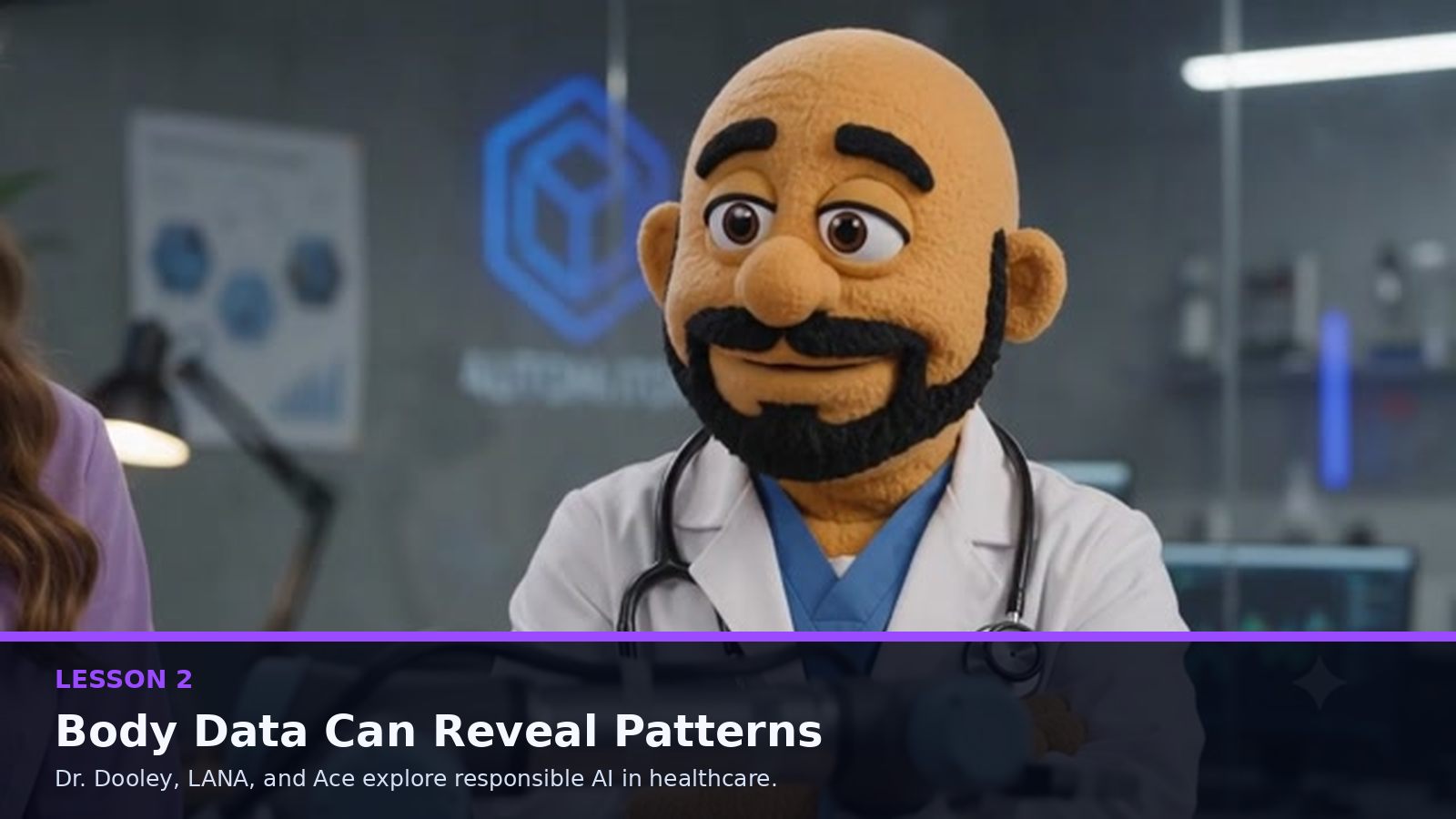
Lesson 2: Body data can reveal useful patterns
The group moves to a glowing digital model of the human body. A heart appears in the air. Then the screen changes to show the brain, muscles, and other body systems.
Ace leans closer. “So AI can see inside everybody?”
“Not exactly,” LANA says. “AI can analyze information that people choose and are allowed to use. It does not magically know everything about a person.”
Healthcare data may include measurements, test results, medical images, movement information, or notes recorded by qualified professionals. Computer systems can help find patterns across that information. Those patterns may help a professional notice something that deserves a closer look.
But a pattern is not the same as a diagnosis.
The same number can mean different things for different people. Age, medications, medical history, symptoms, environment, and many other details can matter. That is why data must be interpreted by qualified healthcare professionals who understand the whole situation.
It must also be protected. Health information is private. Children should never enter names, symptoms, photos, addresses, medical records, or other personal health details into an AI tool unless a trusted adult and qualified professional have approved the specific tool and purpose.
Ace’s privacy check
Before using an AI tool, ask: 1. Does this include private information? 2. Do I have permission to use it? 3. Is this the right tool for the job? 4. Is a trusted adult or professional involved?
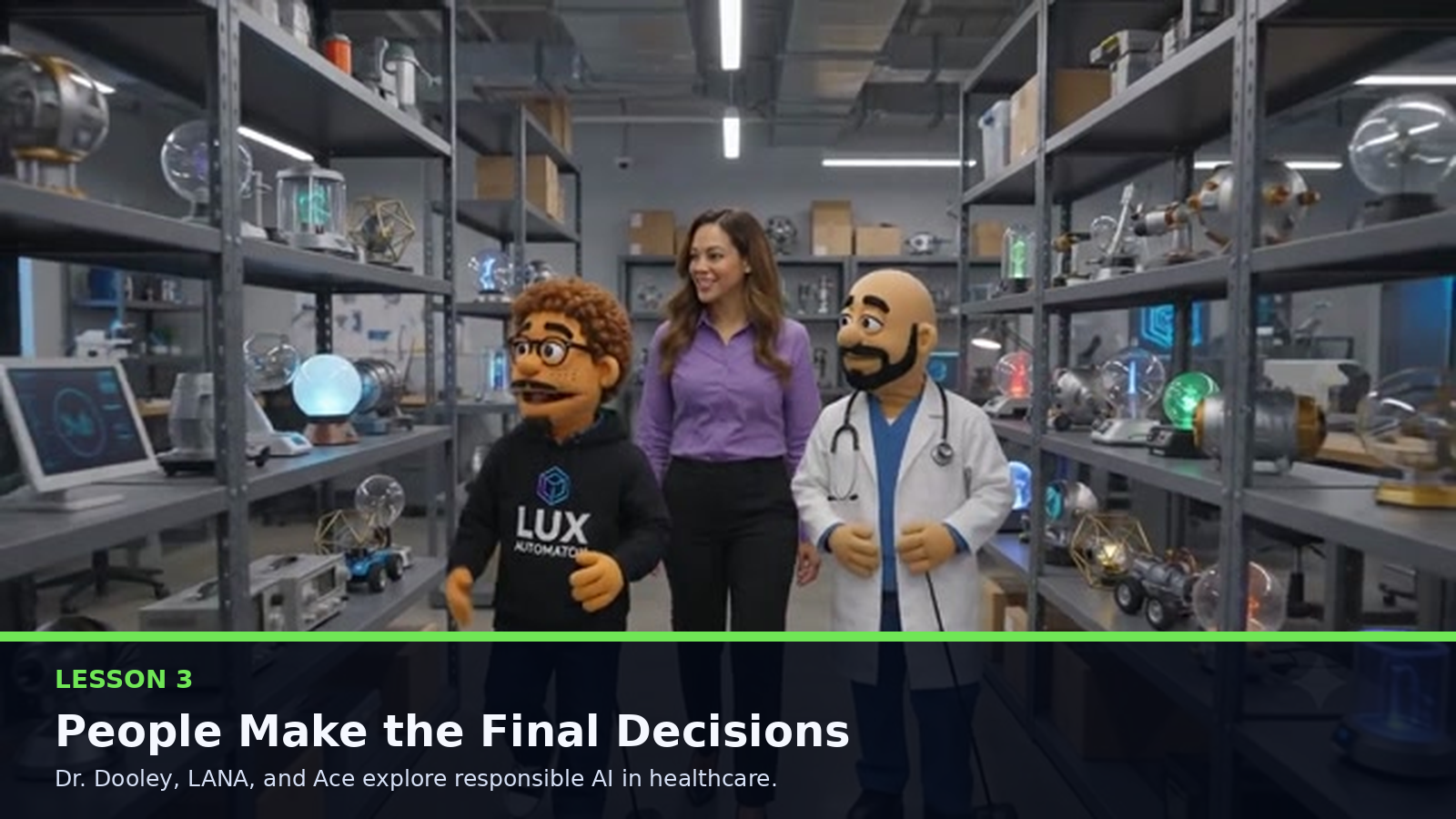
Lesson 3: People make the final healthcare decisions
At the final station, LANA demonstrates a holographic dashboard. The system can compare information and display possible connections. Dr. Dooley studies the screen, asks questions, and then looks back at Ace.
“That screen gave me information,” he says. “It did not give me the full story.”
Healthcare is about more than numbers. It includes listening, observation, trust, culture, family, access, feelings, goals, and the patient’s own experience. A good decision may require a conversation, a physical examination, another test, or a second professional opinion.
This is where human judgment matters.
- AI can be fast. People must be thoughtful. - AI can recognize patterns. People must decide whether those patterns are meaningful. - AI can suggest possibilities. Qualified professionals must evaluate them and remain accountable for care.
LANA adds another important rule: children should never use a chatbot or search result as a substitute for speaking with a parent, caregiver, school nurse, pharmacist, doctor, or emergency professional.
A better way to talk about healthcare AI
Kids do not need to believe that AI is magic, and they do not need to fear every new machine. They need honest language.
Try these phrases at home or in class: - “This tool can help with one part of the job.” - “We still need a person to check the result.” - “Private health information needs special protection.” - “A suggestion is not the same as a medical decision.” - “When health is involved, ask a qualified professional.”
This framework helps children become curious without becoming careless.
Try the Smart Health Lab Challenge
Choose an imaginary healthcare problem that does not use anyone’s real medical information. Examples include reminding a story character to drink water, helping a pretend clinic organize supplies, or designing a friendly robot that teaches handwashing.
Draw your invention and label three parts: - What the technology does - What a person must check - How private information stays protected
Then explain your idea to someone else. Clear communication is part of responsible design.
The adventure continues
As the lab lights dim, Ace looks back at the glowing screens.
“I get it now,” he says. “The smartest system is not the one that does everything. It is the one that helps people do the right thing.”
Dr. Dooley smiles. “You already know. Smart tools, kind hearts, and trained professionals—that’s how we build healthier communities together.”
LANA closes the lesson with the LUX AI Kids promise: Learn AI. Build Tomorrow. Change the World.
---
Important health and safety note
This article is for general education only. It does not provide diagnosis, treatment, medication instructions, or personal medical advice. AI tools cannot replace a licensed healthcare professional. Speak with a qualified doctor, nurse, pharmacist, or other healthcare professional about health concerns or treatment decisions. In an emergency, contact local emergency services.